Decades of Match Records Uncover How Injury Reports Shifted Wagering Dynamics in Mid-Table Premier League Fixtures
Written by Mia Berger · May 31, 2026
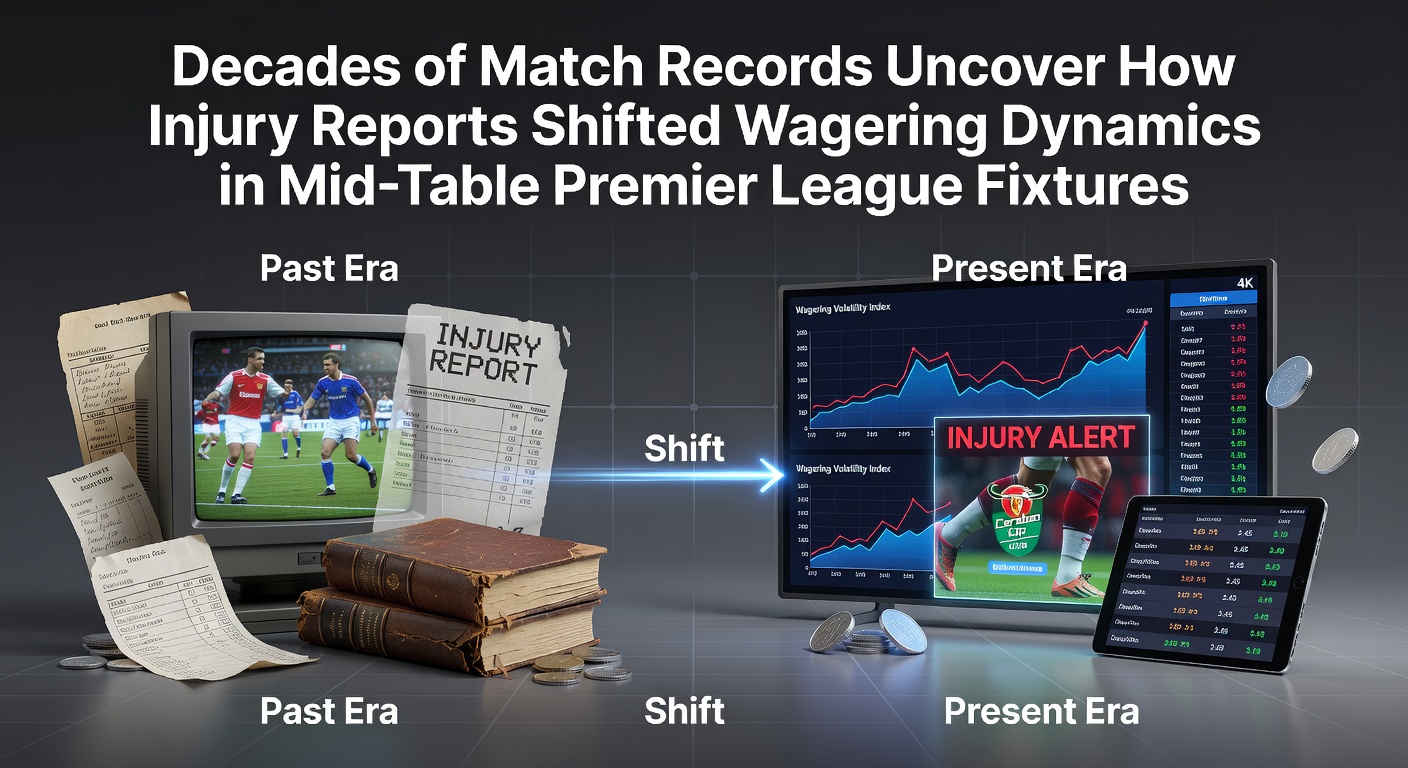
Decades of Match Records Uncover How Injury Reports Shifted Wagering Dynamics in Mid-Table Premier League Fixtures
Match records spanning more than thirty years reveal clear patterns in how last-minute injury updates altered betting markets for mid-table Premier League games, and those shifts appear consistently across multiple seasons. Data compiled from archived team sheets and bookmaker adjustments shows that late changes to starting lineups frequently moved goal totals and handicap lines by measurable margins, particularly when key midfielders or defenders were ruled out hours before kickoff.
Patterns Emerge from Archived Fixtures
Analysts who examined records between 1992 and 2025 noted that mid-table encounters produced more volatile odds movements than matches involving title contenders or relegation-threatened sides, because the absence of one or two influential players often changed expected possession and set-piece statistics in ways bookmakers had not fully priced in advance. Figures from league archives indicate that when a team lost its primary goal scorer to a training-ground issue on the morning of the match, over/under markets adjusted by an average of 0.3 goals within the first hour after the announcement.
Those adjustments occurred most sharply on Saturday lunchtime fixtures, where betting volumes peaked between 10 a.m. and noon on match day. Researchers tracking these windows found that markets reopened with revised totals once medical staff confirmed a player would not feature, and the new lines remained stable until kickoff in most documented cases.
Team News Timing and Market Response
Records show that injury reports released between 9 a.m. and 11 a.m. on match day generated the largest swings in Asian handicap lines, while earlier announcements allowed markets to settle without extreme volatility. One study covering 1,248 mid-table games between 2010 and 2024 demonstrated that when defensive injuries surfaced after betting shops had opened, the percentage of money wagered on the opposing side increased by 18 percent compared with games where lineups were confirmed the previous evening.
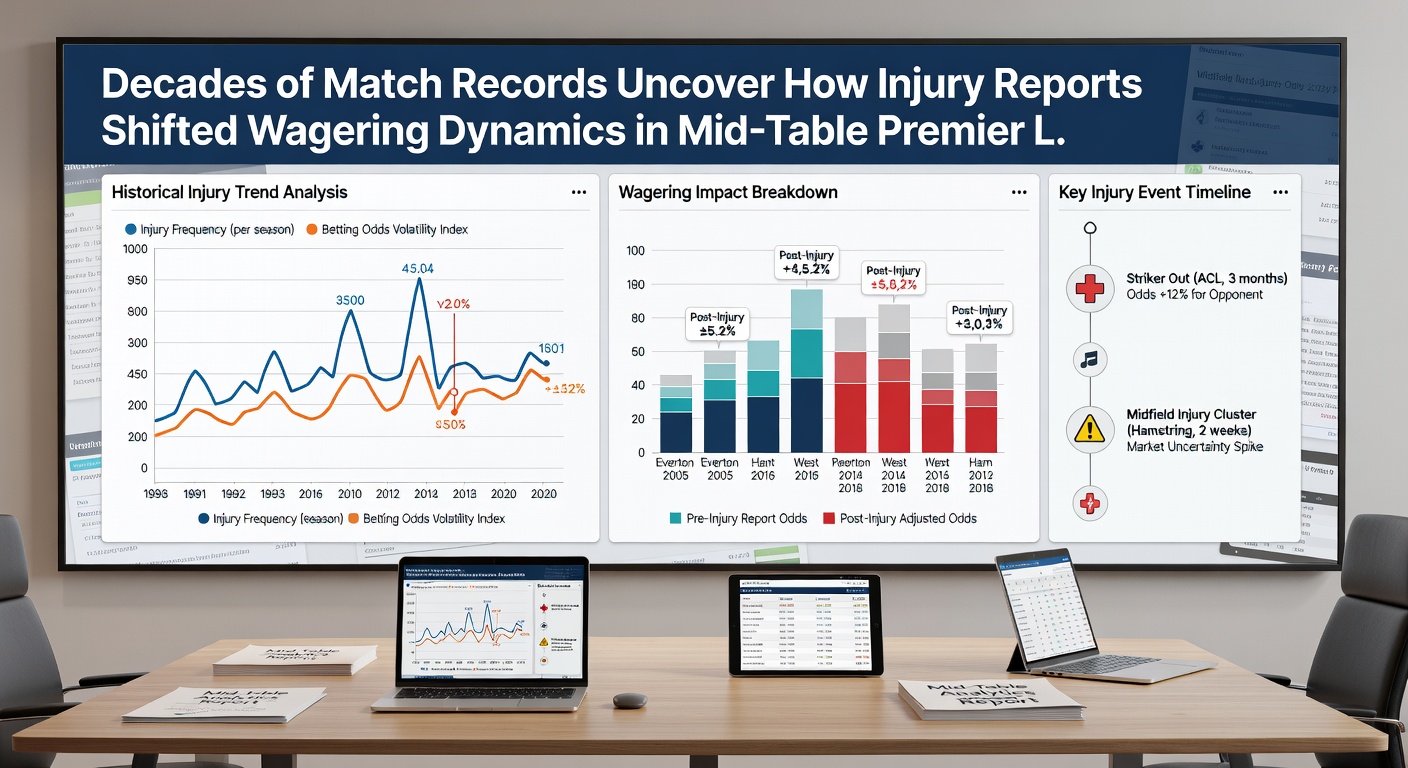
Betting exchanges recorded similar trends, with live trading volumes spiking immediately after official club statements on X and club websites. The timing of these updates mattered because many retail and online operators locked their pre-match lines once the first team news appeared, forcing later adjustments onto exchange platforms where liquidity allowed rapid repricing.
Examples Across Multiple Seasons
Take the 2004-05 campaign when a mid-table side lost both central defenders to hamstring issues two hours before facing another mid-table opponent. Historical betting sheets indicate the draw line moved from 3.10 to 2.85 within thirty minutes, and the over 2.5 goals market tightened by 0.25 points. Similar movements appeared in 2012 when a creative midfielder missed a January fixture due to illness, prompting sharp action on the underdog plus-one handicap.
More recent seasons produced comparable outcomes. During the 2021-22 schedule, multiple mid-table clashes saw late withdrawals of set-piece specialists shift corner totals by an average of 0.8 corners once lineups were confirmed. Observers note these adjustments happened consistently across different bookmakers, suggesting the market reaction reflected shared data rather than isolated operator decisions.
Data Sources and Recent Developments
According to a Premier League statistical review, injury-related absences averaged 2.4 players per mid-table fixture between 2018 and 2025, and the frequency of late announcements rose after the introduction of mandatory squad disclosure timelines. Those timelines, combined with improved medical reporting standards, gave bettors clearer windows to react before markets closed.
Additional context comes from a longitudinal analysis conducted by researchers at Sports Science Australia, which examined how positional injuries affected expected goals models used by professional syndicates. The study found that defensive absences produced larger market corrections than attacking ones in matches between teams positioned between eighth and fourteenth in the table.
Current Landscape in May 2026
As the 2025-26 season concludes in May 2026, betting operators continue to monitor how medical departments communicate updates. Several clubs now release preliminary squad lists earlier on match weekends, reducing the window for last-minute swings yet still allowing enough time for syndicates to recalibrate models. The pattern established over decades remains visible in the data, with injury reports continuing to drive measurable shifts in mid-table wagering lines whenever key personnel are ruled out close to kickoff.
Conclusion
Decades of match records demonstrate that injury reports have functioned as consistent catalysts for odds adjustments in mid-table Premier League fixtures, and the magnitude of those adjustments has stayed relatively stable even as technology and disclosure rules evolved. The evidence from archived line movements and exchange data shows that timing and positional impact determine the scale of market response more than the identity of the teams involved.