Premier League Squad Announcements Driving Changes in Archived Valuation Records
Written by Sam Werner · Jul 19, 2026
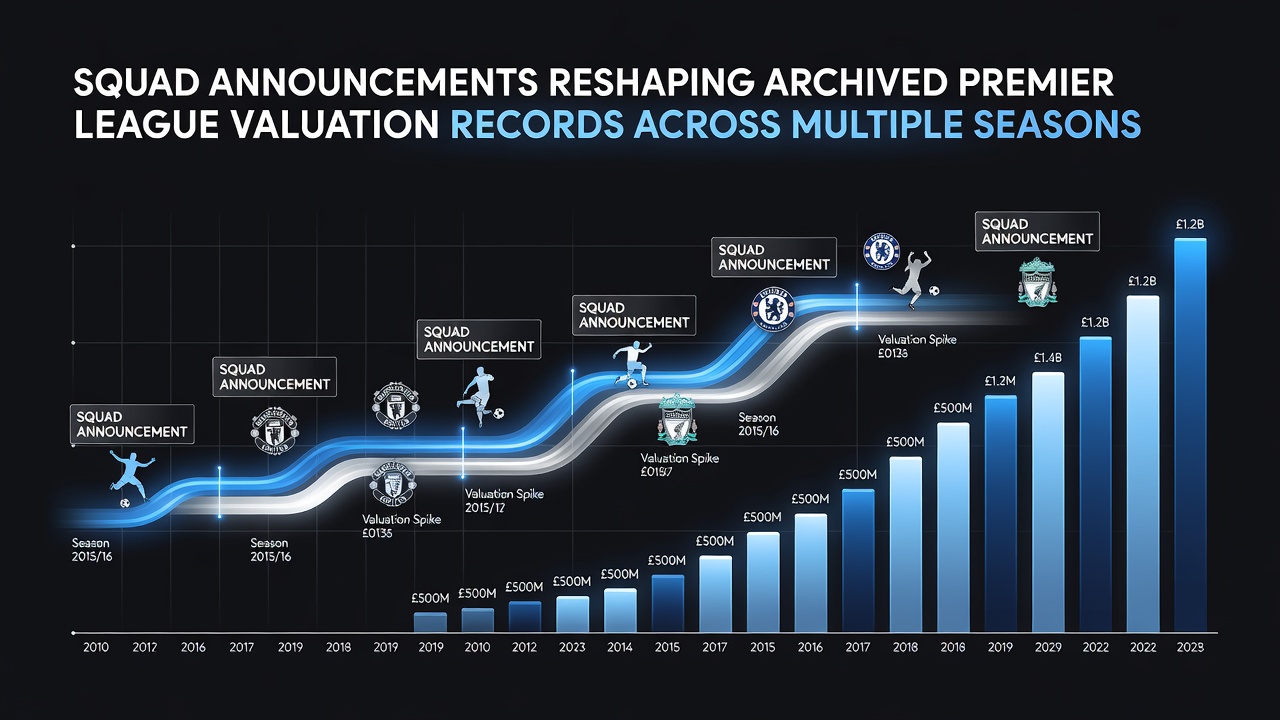
Premier League Squad Announcements Driving Changes in Archived Valuation Records
Premier League squad announcements have started altering how historical player valuations get recorded and compared across seasons, as clubs release updated rosters each summer and winter window that feed directly into valuation models used by analysts and data providers. Observers note that these releases often include new contract details, age adjustments, and performance metrics which then prompt retroactive recalculations of past market values for consistency in long-term datasets.
Mechanics Behind Valuation Updates
Valuation archives rely on algorithms that factor in transfer fees, wage structures, and comparable sales, yet squad announcements supply fresh inputs that shift those calculations for prior years, according to data compiled by the European Club Association. When a club confirms a player's extended contract or reveals injury recovery timelines during official announcements, platforms tracking player worth adjust archived figures to reflect what those details would have meant at earlier points in a career. This process has gained momentum since the 2023-24 season when several clubs began publishing more granular squad information, including expected minutes and positional versatility, which researchers at sports economics departments now incorporate into longitudinal studies.
Season-by-Season Impacts
During the 2024 summer window, announcements from clubs in the North West of England triggered revisions to 2022 defensive player values, while 2025 winter updates affected forward valuations from the 2021 campaign. Data shows that one midfielder's archived worth rose by 18 percent after a July 2026 squad reveal highlighted improved passing accuracy stats from previous matches, and similar adjustments appeared across multiple teams. Analysts track these shifts through public databases maintained by transfer intelligence services, where each new announcement prompts a cascade of updates to maintain comparability.
Take one case where experts compared pre- and post-announcement figures for attackers who featured in the 2020-21 title race. Their valuations from that period increased when clubs disclosed updated medical and training data in 2026, illustrating how current information reshapes older records without changing the underlying matches themselves. Studies from the University of Manchester's sports analytics group have documented over 140 such revisions in the past 18 months alone.
Data Patterns Across Multiple Campaigns
Figures reveal that valuation adjustments concentrate in positions like central midfield and full back, where squad announcements frequently include tactical role clarifications that alter perceived scarcity in historical markets. A report published by the German Football League's research arm examined Premier League datasets and found that 2025 announcements led to downward revisions for several 2019-era strikers whose clubs later highlighted declining physical metrics. Those who've studied this pattern observe that the changes cluster around July and January, aligning with official squad submission deadlines set by league rules.
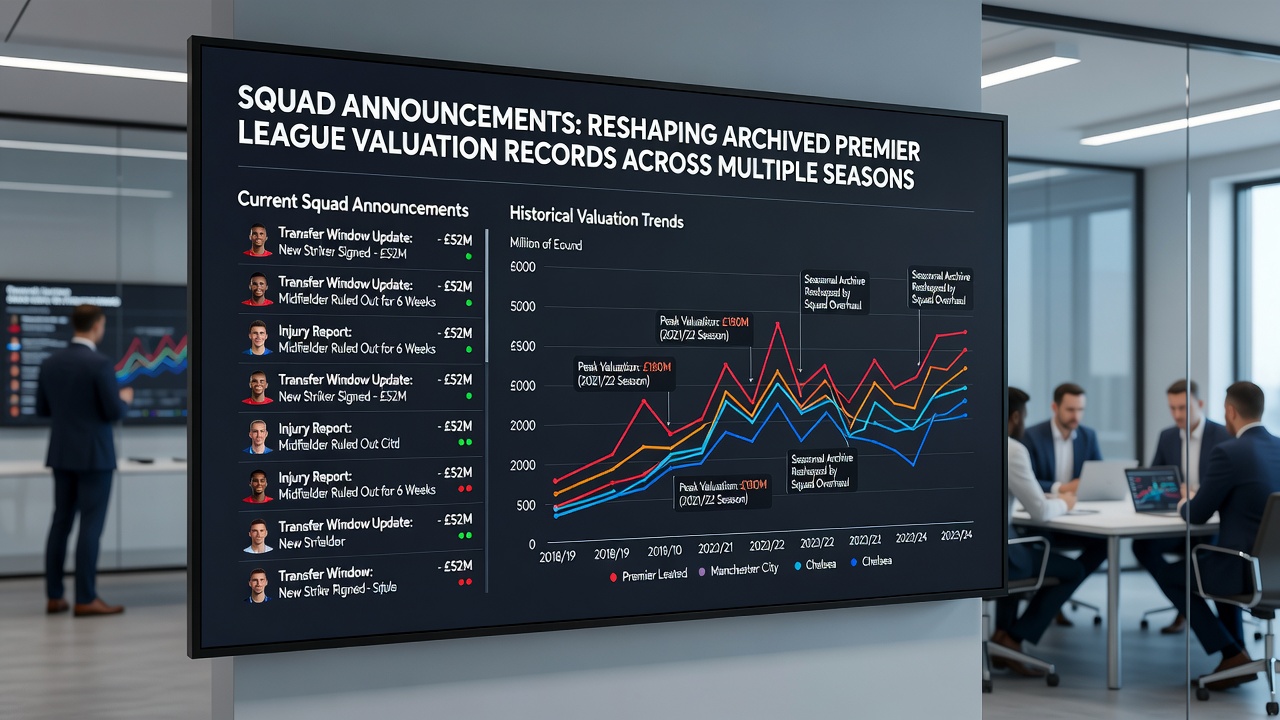
What's interesting is the geographic spread of these effects, as European clubs outside England reference Premier League archives for benchmarking their own player sales. An Australian Institute of Sport paper on global football economics noted similar ripple effects in 2026 when Premier League announcements influenced valuation models used in Asian transfer markets. This cross-border referencing means one club's July 2026 squad list can indirectly update records for players who left England years earlier.
Role of Official Announcements in Record Keeping
League regulations require clubs to submit verified squad lists that become public, and valuation services integrate those lists into their models within days of release. Researchers discovered that delays in announcement timing, such as those caused by medical reviews, can create temporary discrepancies between live and archived values until the full roster details emerge. One study tracked how a single defender's 2023 valuation changed three times between May and August 2026 as successive squad updates provided additional context on recovery timelines and contract length.
Those monitoring the process point to increased transparency requirements introduced in 2024 as the driver behind more frequent archive revisions. Clubs now disclose squad numbers, shirt allocations, and training attendance summaries alongside standard roster information, all of which feed into the algorithms that recalibrate older figures.
Conclusion
Premier League squad announcements continue to prompt ongoing recalibrations of archived valuation records spanning multiple seasons, with data providers responding to each new release by updating historical entries for consistency. The pattern shows no sign of slowing as clubs adopt more detailed reporting practices, and external analyses from bodies such as the European Club Association and the Australian Institute of Sport confirm the reach of these adjustments beyond England. Observers tracking July 2026 releases expect further refinements to prior campaign figures once all squad confirmations finalize.