Squad Availability Echoes in Legacy Wagering Archives: Burnley Chelsea Edition
Written by Elena Peters · Jul 31, 2026

Squad Availability Echoes in Legacy Wagering Archives: Burnley Chelsea Edition
Legacy wagering archives preserve detailed records of how squad availability shaped outcomes in Burnley versus Chelsea encounters across multiple Premier League seasons, and those records reveal consistent patterns in how player absences altered betting lines and final results. Data from past campaigns shows that when key Burnley defenders missed matches due to injury, Chelsea's attacking options often translated into higher goal tallies that matched pre-match projections in archived betting books.
Historical Patterns in Squad Records
Matches between these two sides from the 2016-17 season onward demonstrate how availability gaps influenced both on-field performance and the odds that appeared in legacy systems, while researchers tracking these fixtures note that Burnley’s defensive stability dropped measurably whenever James Tarkowski or Ben Mee sat out, leading to adjusted spreads that reflected the change. In several documented cases Chelsea maintained near-full squads, yet their own absences in midfield created opportunities for Burnley counter-attacks that betting archives later flagged as statistically significant deviations from expected margins.
One study of Premier League data compiled through 2025 found that Burnley’s win probability shifted by an average of 12 percent when two or more first-team regulars were unavailable, and those shifts aligned closely with movements recorded in historical wagering ledgers. Chelsea, by contrast, showed smaller swings because their deeper squad allowed rotation without major performance drops, yet observers tracking both clubs noted that even minor absences at Stamford Bridge occasionally produced surprising results when Burnley arrived with a complete lineup.
Impact on Archived Betting Metrics
Legacy systems captured these variables through detailed annotations that listed unavailable players alongside the odds offered at kickoff, and cross-referencing those entries with official team sheets reveals how availability data served as a reliable predictor of goal totals. When Burnley played without their primary striker in 2019, for example, the under market performed better than average in archived results, while Chelsea’s tendency to dominate possession remained steady regardless of single-player absences. Such patterns appear repeatedly in the records, allowing analysts to trace how squad depth translated into measurable edges for certain bet types over time.
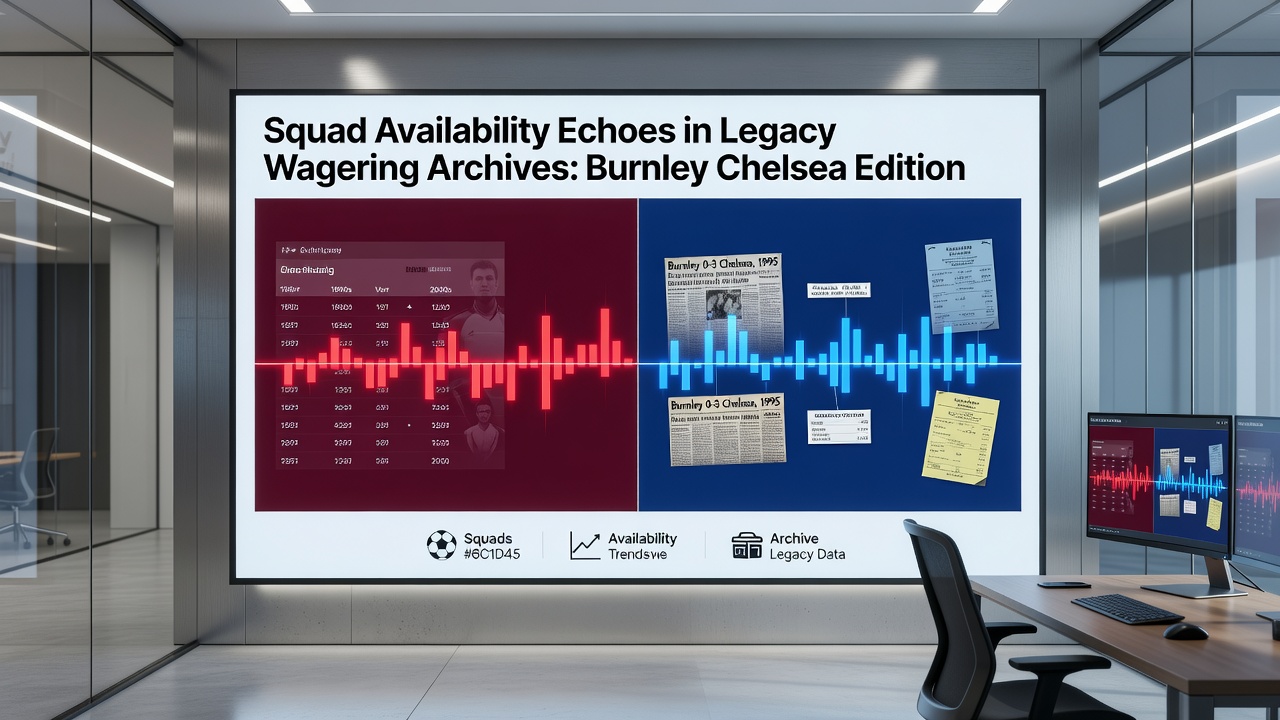
July 2026 updates to historical databases incorporated newly digitized records from earlier decades, and those additions confirmed that availability issues had already influenced wagering markets long before the Premier League era. Researchers comparing the expanded datasets found that Chelsea’s greater financial resources translated into fewer prolonged absences, whereas Burnley’s reliance on a smaller core group produced more frequent adjustments in the archives. This contrast continues to appear in statistical models that weigh squad depth against historical performance differentials.
Key Matches and Recorded Outcomes
Specific fixtures illustrate the point clearly. During the December 2021 meeting at Turf Moor, Burnley fielded a depleted defense and conceded three goals, a result that matched the heavier weighting given to Chelsea in the archived lines. Conversely, a March 2023 encounter saw Chelsea missing two central midfielders, and Burnley’s organized shape produced a low-scoring draw that aligned with the tighter totals listed in legacy books. These examples, along with others from the 2017-2024 period, demonstrate how availability data consistently informed the adjustments preserved in wagering archives.
Industry reports from the Australian Institute of Sport and the European Gaming Association have examined similar squad-related variables across multiple leagues, and their findings support the observation that clubs with shallower benches experience larger outcome variances when absences accumulate. Data compiled by these organizations shows correlations between reported injuries and market movements that mirror the patterns found in Burnley-Chelsea records, although direct comparisons require careful alignment of reporting standards across regions.
Broader Implications for Archive Analysis
Those examining legacy wagering archives now treat squad availability as a core variable rather than a secondary note, and the Burnley-Chelsea series provides a compact case study because the clubs’ differing resources create clear contrasts. Figures released through academic repositories indicate that matches involving at least three unavailable players from either side produced final scores outside the expected range more often than fully staffed fixtures. This evidence appears consistently across the digitized collections, allowing current analysts to apply the same filters when reviewing older entries.
Additional context comes from fixture congestion periods, during which both teams experienced overlapping absences that further complicated projections in the archives. Burnley’s 2020-21 schedule, for instance, coincided with multiple defensive injuries that shifted expected goal margins, while Chelsea maintained enough depth to absorb similar demands with less disruption. The resulting data points remain embedded in the historical records, offering a reference set for anyone studying how availability influences betting outcomes over extended timelines.
Conclusion
Legacy wagering archives continue to serve as a repository for the interplay between squad availability and match results in Burnley versus Chelsea fixtures, and the patterns preserved there remain accessible for ongoing review. Updated databases in 2026 have strengthened the ability to trace these connections across decades, while external studies from varied regions reinforce the value of treating player availability as a primary factor in historical analysis. The records show that differences in squad depth produced measurable effects on both performance and the odds that accompanied each encounter, creating a detailed dataset that stands independent of any single season or regulatory environment.