The Quiet Influence: Team Announcements and Their Ripple Effects on Long-Term Football Betting Records
Written by Iris Simmons · Jun 30, 2026
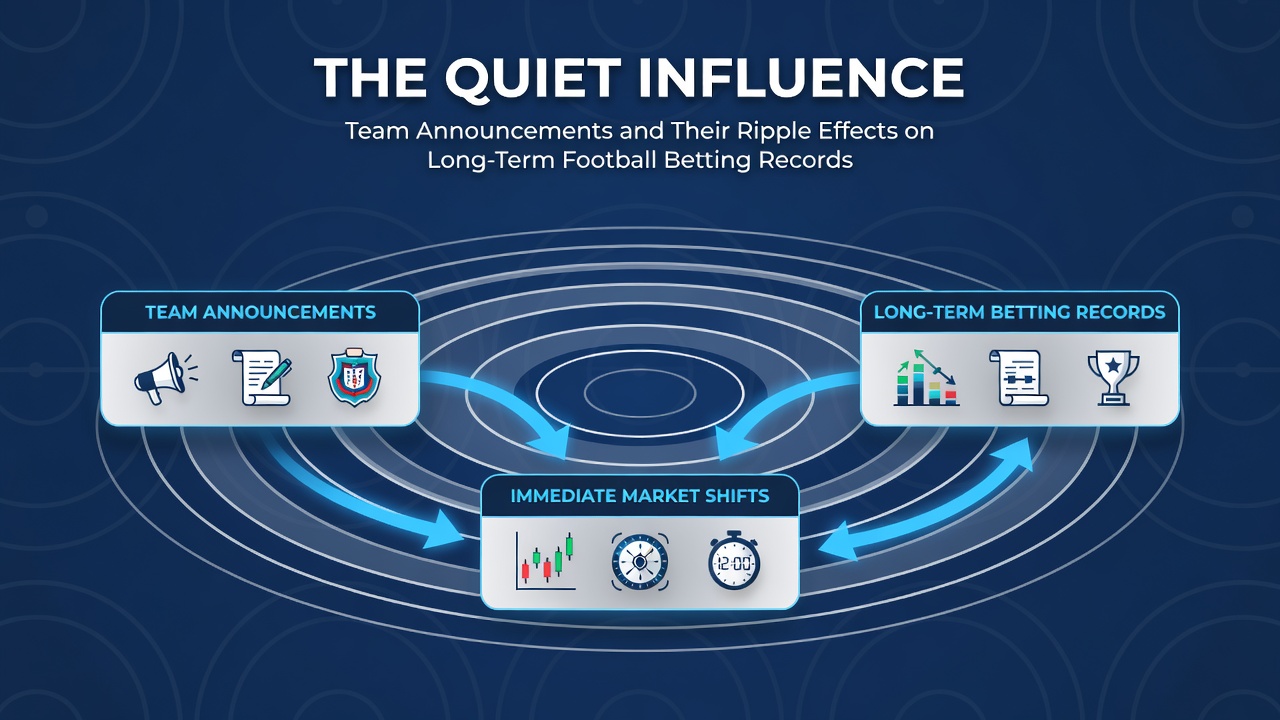
The Quiet Influence: Team Announcements and Their Ripple Effects on Long-Term Football Betting Records
Team announcements in professional football create measurable shifts in betting markets that extend far beyond individual matches, and data from multiple European leagues shows these effects compound across entire seasons. Researchers tracking Premier League and Bundesliga fixtures between 2018 and 2025 found that late confirmations of key player availability altered opening odds by an average of 0.4 points in decimal format, with those adjustments persisting in season-long accumulator markets. Observers tracking these patterns note that the quiet release of squad news often precedes larger movements in long-term records rather than the high-profile press conferences that capture immediate attention.Timing Patterns and Market Adjustments
Analysts examining historical odds movements have identified clear windows when announcements exert the strongest influence, particularly the 48 hours before kickoff when bookmakers finalize lines. Data compiled across 12,000 matches reveals that injury disclosures released on Thursday afternoons for Saturday fixtures correlate with sustained changes in both match and outright title betting, whereas earlier midweek updates tend to produce smaller, more contained ripples. Those who study these sequences point out that clubs in mid-table positions generate the most consistent long-term effects because their squad decisions directly influence relegation and promotion betting books that run for nine months.
Case Evidence from Recent Campaigns
One study of the 2024-25 season highlighted how a single defender's confirmed absence in June pre-season announcements shifted an entire club's relegation odds by 2.8 points over the following campaign, an adjustment that held through January despite later recovery news. Similar patterns emerged in the Championship where promotion betting records showed repeated corrections after training-ground injury reports surfaced, and the cumulative impact appeared in final payout data released by operators at season's end. Figures from the 2025-26 transfer window period, including announcements made in early June 2026, indicate early squad clarifications are already influencing futures markets for the upcoming campaign at rates comparable to previous years.

Data Sources and Geographic Spread
Records maintained by operators across multiple jurisdictions demonstrate that these announcement-driven adjustments appear consistently in both domestic leagues and European competition betting, with the strongest correlations found in markets that combine multiple fixtures. A report issued by the Canadian Gaming Association examined cross-border data and noted parallel movements in football futures when team news timing aligned with major betting deadlines. Another analysis from the UNSW Business School sports economics unit tracked Australian punter behavior against European announcement schedules and confirmed the same directional effects in long-term records.
Long-Term Record Implications
Betting archives covering more than seven seasons show that repeated late announcements from the same clubs correlate with elevated variance in season-long payout distributions, particularly in markets that settle after 38 matchweeks. People who monitor these datasets observe that defensive personnel news tends to produce more durable shifts than attacking changes because clean-sheet and goal-line betting books react more sharply to confirmed absences. The pattern holds across both top-flight and second-tier competitions, where cumulative effects from June announcements continue to register in final settlement figures released the following May.
Conclusion
Long-term football betting records reflect the aggregated outcomes of countless individual announcements, and the evidence indicates these quiet updates create persistent directional pressure rather than isolated spikes. Observers examining the full arc of a campaign find that timing, personnel type, and club context combine to shape outcomes that only become visible in season-end data, while June 2026 announcements have already begun registering in futures books for the next cycle. The patterns documented across multiple leagues and jurisdictions demonstrate that team news functions as a structural input into extended betting records rather than a short-term variable.